The Wabash Valley is made up of problem solvers, difference makers, and opportunity creators.
Together, we’re on a mission to change lives forever in our community by investing in programs focused on supporting struggling families.
The Challenge
Many in the Wabash Valley are working hard…but struggling to survive. This represents over 44% of our community who are ALICE.
How We Invest
Volunteer-led investment panels evaluate and make recommendations based on a process to find the best programs in our community.
Our Work
We invest in organizations and programs that are hands-on in creating lasting change for ALICE in order to create a better community for everyone.
News & Events
Keep up to date on what we are doing in our community!

United Way of the Wabash Valley Awards $34,816 in Behavioral Health Mini Grants to Support Mental Well-Being
United Way of the Wabash Valley (UWWV) has awarded $34,816 in Behavioral Health Mini Grants to five organizations serving individuals across its six-county service area. These grants, the first awards of UWWV’s Fall 2025 funding cycle, support programs that strengthen mental and emotional well-being, advancing the organization’s broader Healthy Community focus.
“We know that people across the Wabash Valley are facing increasing behavioral health challenges, and community partners are working hard to meet those needs,” said Dorothy Chambers, Executive Director of United Way of the Wabash Valley. “These mini grants eliminate barriers and help organizations expand access to supportive services, connecting more people to the care and relationships they deserve.”
The Behavioral Health Mini Grants provide funding of up to $10,000 to support projects that increase access to behavioral health services or improve supportive environments for individuals. This year’s awards include:
Richard G. Lugar Center for Rural Health
Youth Mental Health First Aid — $10,000 Counties Served: Vigo, Vermillion, Sullivan, Parke, Clay, and Clark (IL) Funding will support free Youth Mental Health First Aid training for educators and school staff across the Wabash Valley. Participants will learn to identify signs of anxiety, depression, substance use, psychosis, ADHD, and other behavioral health concerns, and will receive a stipend for completing the certification. The training equips school personnel to recognize crises early and connect adolescents ages 12–18 to appropriate care.
Vigo County Education Foundation – Sarah Scott Middle School
Sensory Room Project — $2,936 County Served: Vigo The grant will help transform an unused classroom into a dedicated sensory room, giving students a calming, structured environment to regulate emotions, de-escalate when
overwhelmed, and re-engage in learning. The space will be overseen by school leadership and behavioral support staff, who will help students practice coping strategies and self-regulation.
Council on Domestic Abuse (CODA)
CODA Mental Health Program — $9,880 Counties Served: Vigo, Vermillion, Sullivan, Parke, Clay CODA will expand access to mental health counseling for shelter residents, clients, and staff by partnering with a local counseling provider to offer both in-person and telehealth therapy. Flexible, trauma-informed access to care remains a critical need for survivors of domestic violence, and this funding will support individuals seeking support.
Human Resources Center of Edgar and Clark Counties (HRC)
Breaking Barriers: School-Based Mental Health Access for Clark County Youth — $10,000 County Served: Clark (IL) HRC will continue placing embedded mental health therapists and recovery support specialists inside schools in Marshall, Casey, and Martinsville. Students receive on-site therapy, group counseling, crisis intervention, and substance use support during the school day—removing barriers related to cost, transportation, and missed class time.
University of Illinois Extension (Clark, Crawford, and Edgar Counties)
Mindful Me: Empowering Youth from the Inside Out — $2,000 County Served: Clark (IL) The grant will provide elementary schools with age-appropriate Social-Emotional Learning kits based on the Mindful Me curriculum. Each kit includes 10 lessons designed to help K–3 students develop emotional regulation, stress management, self-awareness, and mindful decision-making through stories and hands-on activities.
“By supporting programs that promote mental health and well-being, United Way of the Wabash Valley is empowering individuals, strengthening families, and building healthier, more resilient communities for everyone,” said Stacie Amerman, Director at Hamilton Center. “The funded programs will continue to provide meaningful support to community members by expanding access to counseling, crisis intervention, prevention initiatives, and other essential mental health resources.”
UWWV will announce the results of the second phase of its behavioral health grant initiative in February 2026. A total of $140,000 will be awarded to selected applicants, with grants of up to $40,000 each




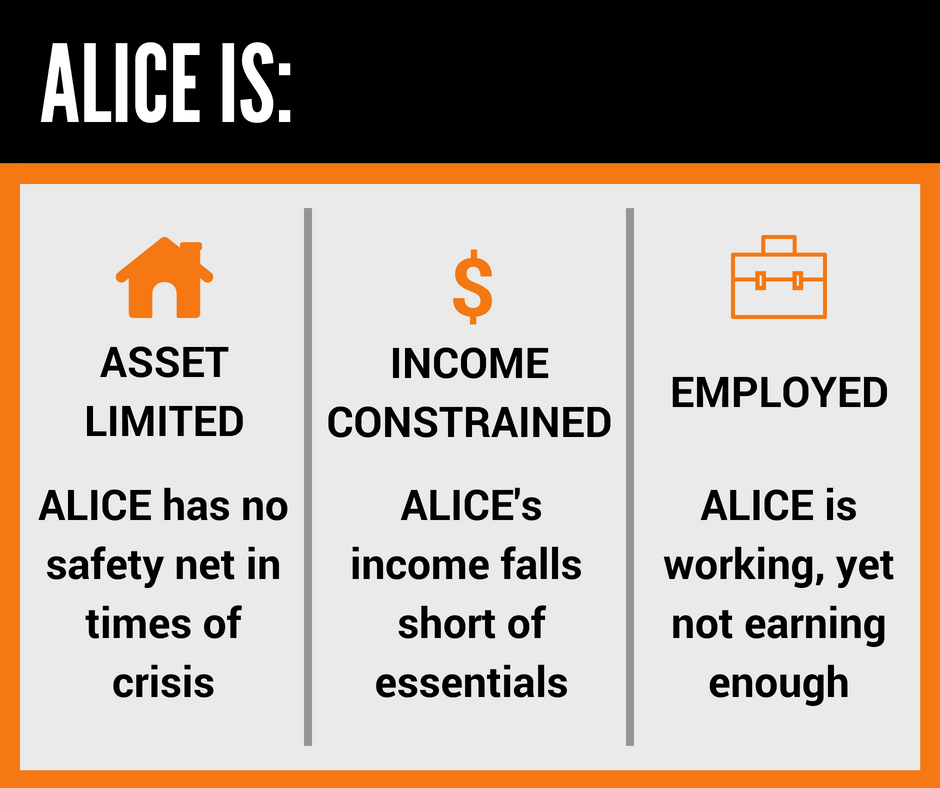
ALICE is a hardworking member of the community who is employed yet does not earn enough to afford the basic necessities of life.
ALICE earns above the federal poverty level, but does not earn enough to afford a bare-bones household budget of housing, child care, food, transportation, and health care.
In most cases, ALICE is not eligible for public assistance because they are, in fact, earning income above the federal poverty level. These individuals and families are faced with difficult choices daily, often detrimental in the long run. Put food on the table or gas in the car? Take a sick child to the doctor or pay the utility bill?
Over 44% of the households in the Wabash Valley fall into ALICE or further into poverty.
The United Way’s Bold Goal addresses moving families out of struggle and into stability.